Modern Chesterfield 2-Seater Sofa: Fit, Comfort & Care
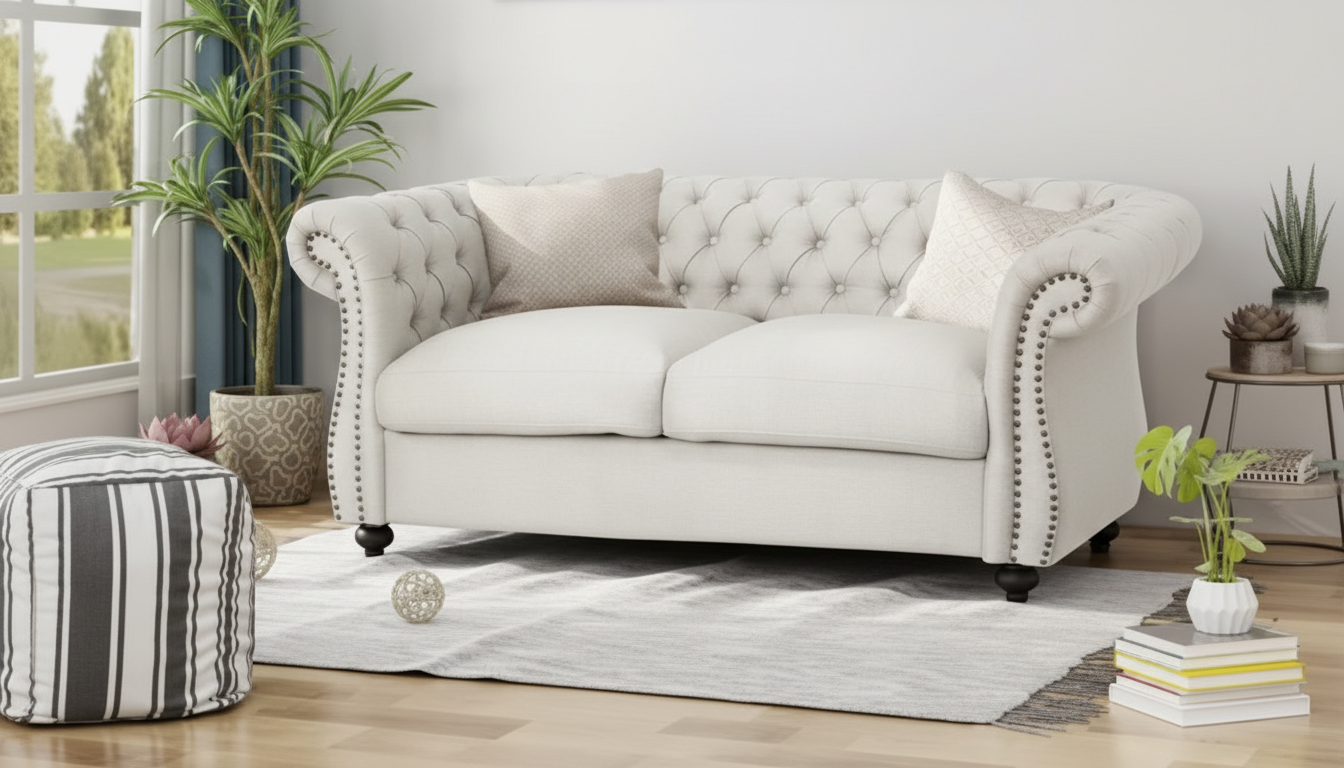
Modern Chesterfield Two-Seater Sofa
A two-seater Chesterfield brings the iconic deep-buttoned, rolled-arm silhouette into a more current look that suits apartments, reading nooks, and refined living rooms. This guide focuses on what to look for in comfort, proportions, materials, and everyday care so the sofa feels as good as it looks.
What Makes a Chesterfield Feel “Modern”
A modern Chesterfield keeps the recognizable DNA—tufting, rolled arms, and a tailored presence—while updating the details that affect day-to-day livability and how “light” the piece feels in the room.
- A cleaner overall profile while keeping signature elements like tufting and rolled arms
- More versatile upholstery options and updated leg shapes/heights that lighten the visual footprint
- Balanced seat depth for everyday lounging rather than purely formal sitting
- A size that works as a focal point without dominating smaller rooms
When the arms and back are visually cohesive and the legs lift the frame slightly off the floor, the Chesterfield reads less like a museum piece and more like an intentional, contemporary anchor.
Highlights of the Two-Seater Format
- Space-efficient footprint for condos, offices, and secondary seating areas
- Easier placement opposite a media console or across from a pair of accent chairs
- Simpler to move through doorways and around tight corners than larger sofas
- Creates a defined conversation zone when paired with a compact coffee table or ottoman
Two-Seater Planning Checklist
| What to Measure | Suggested Minimum | Why It Matters |
|---|---|---|
| Wall width for the sofa | Sofa width + 12–24 in total breathing room | Prevents a cramped, pressed-against-the-wall look |
| Clear walkway in front | 30–36 in | Comfortable circulation through the room |
| Distance to coffee table/ottoman | 14–18 in | Easy reach without crowding knees |
| Rug sizing | Front legs on the rug when possible | Anchors seating and visually enlarges the area |
Comfort and Construction Priorities
The best-looking Chesterfield won’t earn its spot if it doesn’t feel supportive after a full movie or a long conversation. Prioritize the parts you’ll notice every day: seat support, back angle, arm comfort, and structural stability.
- Seat support: look for consistent support that stays comfortable over longer sitting sessions
- Back style: tufted backs feel structured; check that the angle supports upright and relaxed postures
- Arm height and roll: rolled arms can double as casual perches but should not force shoulders upward
- Frame and joinery: sturdier frames reduce wobble and extend longevity, especially with frequent use
For households where the sofa does double-duty (lounging, laptop time, visiting friends), a balanced seat depth is the “sweet spot”—deep enough to relax, not so deep that shorter sitters feel like they’re sliding forward.
Upholstery Options and Everyday Durability
Upholstery determines not only the look, but how the sofa handles real life—pet hair, snack spills, sunlight, and the friction of daily use.
- Choose a texture and finish that matches real life: pets, kids, entertaining, and sunlight exposure
- For fabric: consider tight weaves that resist snagging and show fewer pull marks
- For leather or leather-like materials: plan for routine dusting, occasional conditioning, and avoiding direct heat sources
- Color practicality: mid-tones and heathered textures tend to hide minor wear better than ultra-light solids
If you’re considering leather or imitation leather, it helps to understand labeling and care expectations; the Federal Trade Commission’s leather and imitation leather guides outline how these products are described in the U.S. For durability and performance expectations across contract-grade furniture, BIFMA furniture standards are a useful benchmark to be aware of when comparing construction claims.
Styling a Modern Chesterfield Without Making It Feel Formal
Chesterfields naturally look tailored; styling choices determine whether that tailoring reads “stuffy” or “effortlessly refined.” The easiest approach is to add softness and keep surrounding silhouettes clean.
Care, Cleaning, and Long-Term Upkeep
Also consider general household safety when placing furniture, especially in smaller spaces where circulation is tight; the U.S. Consumer Product Safety Commission guidance on furniture safety is a helpful reference for stable layouts and avoiding hazards.
A Closer Look at the Modern Chesterfield Two-Seater Sofa
The Modern Chesterfield Two-Seater Sofa is designed to deliver the recognizable Chesterfield character in a two-seat scale suited for flexible layouts—ideal when you want a statement piece that still respects limited square footage.
Quick Buying Snapshot
| Detail | What to Confirm Before Ordering |
|---|---|
| Room fit | Overall width and depth vs. available wall space and walkway clearance |
| Access fit | Doorway width, stair turns, elevator dimensions (if applicable) |
| Daily use | Who sits most often and preferred seat depth/firmness |
| Placement | Distance from heat vents and direct sun to reduce drying/fading |
More In-Stock Picks
- Brunello Cucinelli Cotton T-Shirt
- Cozy Striped Baby Romper Jumpsuit for Newborns & Infants 0-18 Months
- Toddler Baby Goose Embroidered Knit Sweater – Cozy Fall & Winter Pullover
FAQ
Will a two-seater Chesterfield feel too formal for a casual living room?
Not if you balance it with relaxed layers and clean-lined companions. Lighter legs, mixed-material tables, and soft textiles like a throw and a single lumbar pillow keep the look approachable while the tufting adds polish.
How much space should be left in front of a two-seater sofa for comfortable walking?
A typical comfortable walkway is 30–36 inches, with slightly less workable in tighter apartments if traffic is minimal. For a coffee table or ottoman, leaving about 14–18 inches usually feels easy to reach without crowding knees.
How should tufted upholstery be cleaned and maintained?
Vacuum regularly in tufts and seams to remove dust and grit, and blot spills promptly rather than scrubbing. Follow the upholstery care label closely and minimize direct sun or heat exposure to reduce fading and drying.










Leave a comment