20-Bar Semi-Auto Espresso Machine: Temp Control + 58mm
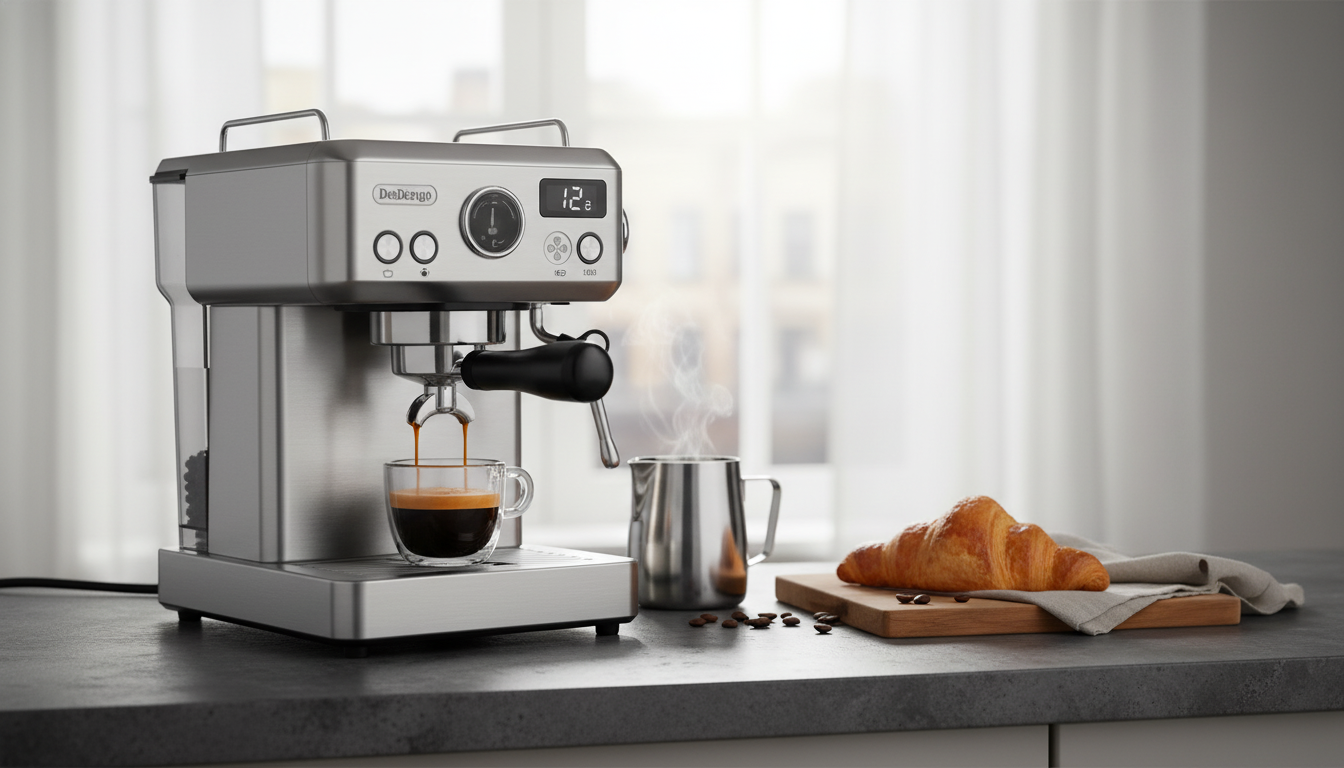
20 Bar Semi-Automatic Espresso Machine with Temperature Control (58mm Portafilter): What to Know Before Buying
A semi-automatic espresso machine can deliver café-style shots at home when the core variables—brew temperature, pressure, grind, dose, and puck prep—work together. A 20 bar semi-automatic model with temperature control and a 58mm portafilter aims to make those variables easier to repeat, while keeping the hands-on feel that many home baristas prefer. Below is what these features actually change in flavor, consistency, workflow, and which accessories tend to fit best with a standard 58mm setup.
Quick overview of the machine
This style of machine sits in the sweet spot between fully manual and fully automatic:
- Semi-automatic workflow: you control grind size, dose, distribution, tamp, and when to stop the shot; the machine handles heating and pumping water through the coffee.
- Temperature control: helps keep brewing closer to the intended range so shot-to-shot results are less of a moving target.
- 58mm portafilter: matches a common “standard” format, expanding compatibility with baskets, tampers, dosing funnels, and other tools.
- 20 bar pump rating: signals a strong pump capability, but great espresso depends far more on stable flow through the puck than on maximum bar claims.
What temperature control changes in the cup
Temperature is one of the most overlooked variables for home espresso because it’s harder to “see” than grind size or shot time. With adjustable temperature control, you can narrow down taste issues faster and keep results steadier when you’re pulling multiple drinks.
- Reduces extremes: brewing too cool often tastes sour and thin; too hot can push harsh bitterness and dryness.
- Improves back-to-back consistency: the first shot and the third shot have a better chance of tasting similar.
- Makes dialing in more precise: once grind and dose are close, small temperature tweaks can refine sweetness, clarity, and the bitterness balance.
- Supports different roasts: lighter roasts often like slightly higher temps; darker roasts can taste cleaner with slightly lower temps.
Taste symptoms and a practical adjustment
| What you taste | Likely cause | What to adjust first | What to adjust next |
|---|---|---|---|
| Sour, thin, quick shot | Under-extraction | Finer grind or higher dose | Slightly higher brew temperature |
| Bitter, dry, very slow shot | Over-extraction | Coarser grind or lower dose | Slightly lower brew temperature |
| Watery crema, uneven flow | Channeling or weak puck prep | Improve distribution/tamp | Adjust grind to slow flow slightly |
| Good taste then drifts after a few shots | Heat management inconsistency | Allow brief recovery/flush | Use consistent shot timing and temperature setting |
For more background on brewing fundamentals and how variables interact, authoritative references like the National Coffee Association’s brewing basics and the Specialty Coffee Association’s standards work provide helpful context.
Why a 58mm portafilter matters
A 58mm portafilter isn’t automatically “better” tasting on its own, but it tends to make the overall setup easier to build and upgrade.
- Accessory compatibility: 58mm tools are widely available—precision baskets, tampers, bottomless portafilters, dosing funnels, and distribution tools.
- More room for puck prep: a wider basket can feel less cramped when distributing grounds and tamping level.
- Upgradability: you can start with forgiving baskets and move to more demanding unpressurized baskets as your grinder and technique improve.
- Replacement convenience: standard sizing often makes it simpler to find spare baskets and common wear parts.
Understanding the “20 bar” claim and real espresso pressure
A “20 bar” label is best read as a pump capability rating—not the pressure you should expect throughout extraction. Traditional espresso is typically brewed around roughly 8–10 bar at the puck, depending on machine design and how the coffee bed resists flow.
- Pump rating is a ceiling: it describes what the pump can achieve under restricted conditions.
- Resistance drives the actual pressure: grind size, dose, basket type, and tamp determine how pressure builds and how water travels through the puck.
- Pressurized vs. unpressurized baskets: pressurized baskets can “fake” resistance and hide grind inconsistencies; unpressurized baskets reward an espresso-capable grinder and solid puck prep.
- Consistency beats peak pressure: stable temperature, repeatable dose, and a grinder that produces uniform particles tend to improve flavor more than chasing higher bar numbers.
If you enjoy going deeper on espresso recipes and extraction concepts, Barista Hustle’s espresso articles are a widely respected resource.
Daily workflow for better shots
Simple starting recipes (adjust to taste)
| Drink style | Dose (example) | Yield (example) | Time (guide) | Notes |
|---|---|---|---|---|
| Classic espresso | 18 g | 36 g | 25–35 s | Adjust grind first for time; adjust temperature for flavor balance |
| Ristretto-leaning | 18 g | 28–32 g | 25–35 s | Often sweeter/denser; can benefit from slightly finer grind |
| Lungo-leaning | 18 g | 45–55 g | 30–45 s | Can get bitter; consider slightly coarser grind or lower temp |
| Milk drinks (latte/cappuccino) | 18 g | 34–40 g | 25–35 s | Prioritize a balanced shot; milk softens sharp edges but can dull clarity |
Grinder and accessories that pair well with a 58mm setup
Cleaning, descaling, and care
Featured in-stock picks
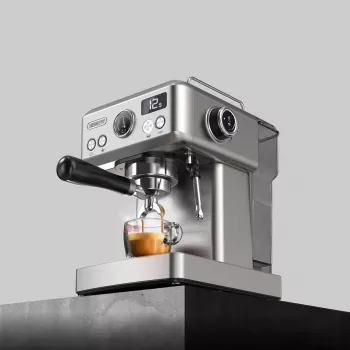
- 20 Bar Semi-Automatic Espresso Machine with Temperature Control – 58mm Portafilter
- Brunello Cucinelli Cotton T-Shirt
Who this machine fits best
FAQ
Is a 58mm portafilter better than smaller sizes?
It’s “better” mainly for compatibility: 58mm tools and baskets are widely available and easy to upgrade. Taste differences usually come more from basket quality, puck prep, and grinder consistency than from diameter alone.
What brew temperature should be used for espresso?
A practical starting range is about 195–205°F (roughly 90–96°C). Lighter roasts often taste fuller at slightly higher temperatures, while darker roasts can taste cleaner and less bitter at slightly lower temperatures.
Does 20 bar make better espresso than 15 bar?
No—those numbers are maximum pump ratings, not the brewing pressure you’ll necessarily get at the coffee puck. Shot quality depends more on stable temperature, consistent grinding, and repeatable puck prep that creates even resistance and flow.











Leave a comment