9.5-Inch Manual Dough Press for Home Pizza & Pastry
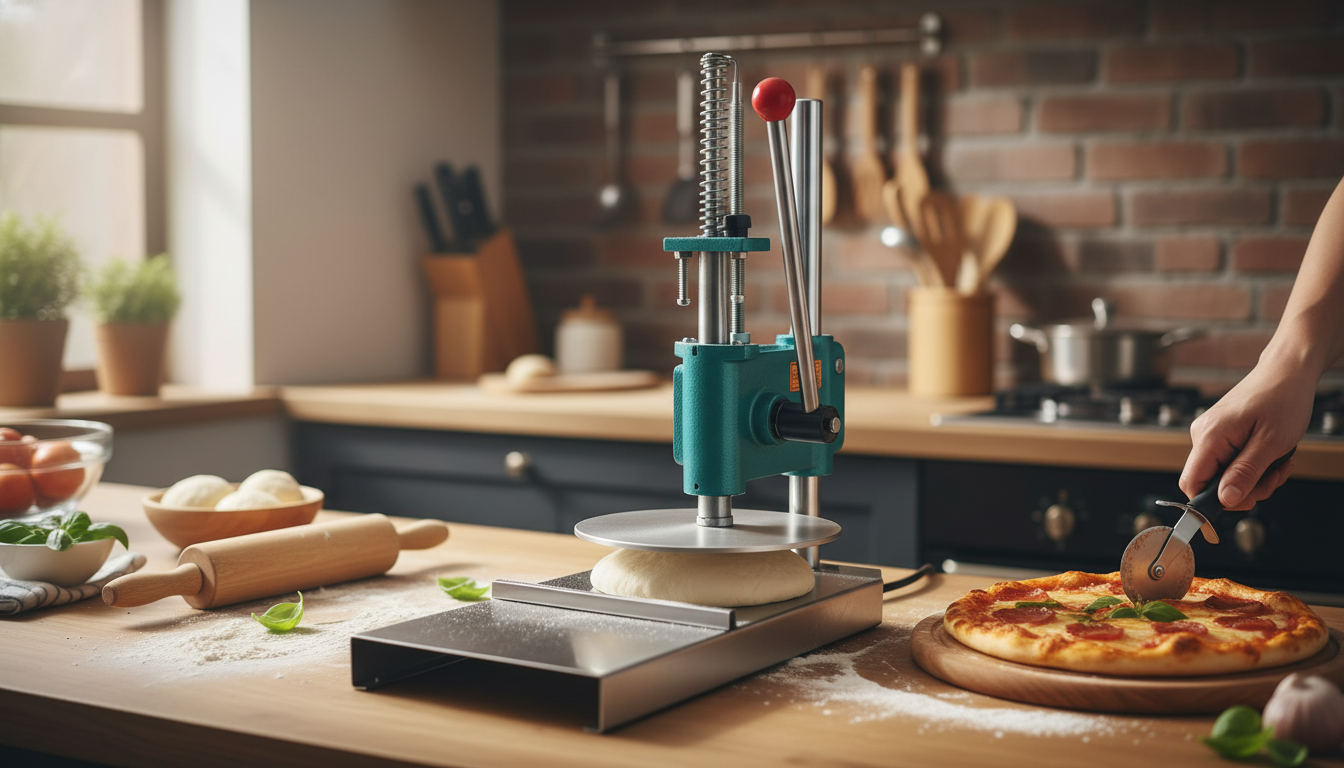
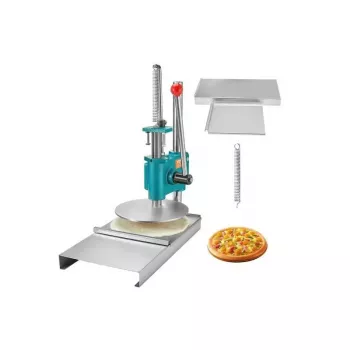
Manual Pizza Dough Press Machine (9.5-inch) for Household Pizza and Pastry
A manual dough press helps turn portioned dough into evenly sized rounds with less rolling, making it easier to prepare pizza bases, flatbreads, and certain pastry shells with consistent thickness and shape. For home pizza nights, the real win is repeatability: consistent rounds bake more evenly, fit the same pan or stone each time, and speed up prep when making multiple crusts.
What a manual dough press does (and what it doesn’t)
A manual press is designed to shape dough quickly and consistently, but it works best when it complements good dough handling—rather than replacing it.
- Presses dough into a round shape up to the plate size; ideal for quick, repeatable crusts at home.
- Helps maintain consistent diameter across multiple pizzas for more even baking and topping distribution.
- Does not replace proper dough fermentation; over-pressing can squeeze out gases and reduce airy edges.
- Works best with portioned dough balls that have rested, so the gluten relaxes and the dough spreads without tearing.
9.5-inch capacity: who it fits best
A 9.5-inch pressing surface is a sweet spot for everyday home cooking—large enough for a satisfying personal pizza, and convenient for smaller ovens and pans.
- Suited for personal pizzas, smaller family pizzas, and quick weekday meals where speed matters.
- Helpful for households that want repeatable sizing for pizza stones, baking steels, or compact countertop ovens.
- Also useful for certain pastry tasks (for example, forming consistent rounds for hand pies or bases for small tarts), depending on dough type and stickiness.
- For larger pizzas, multiple smaller pressed rounds can be used for calzones/turnovers, or consider rolling for oversized crusts.
How to use it for better crusts
Pressing is simple, but small technique choices make a noticeable difference in texture and shape—especially with higher-hydration doughs.
- Portion the dough: weigh or eyeball equal dough balls to get consistent results across batches.
- Rest before pressing: a short bench rest makes dough easier to spread and reduces snap-back.
- Use light flouring or parchment: reduce sticking by dusting plates lightly or pressing between parchment sheets.
- Press in stages: a gentle first press, brief pause, then a second press often yields a rounder shape with fewer tears.
- Finish by hand if desired: pinch or stretch the rim after pressing to preserve a thicker edge for a more pronounced crust.
If the goal is an airier rim, stop pressing as soon as you reach the diameter you want, then lift the round and do a quick, gentle rim stretch by hand. That approach keeps the center even while preserving a little more structure at the edge.
Pizza dough vs. pastry dough: handling differences
Not all doughs behave the same under pressure. A press can be a time-saver for both pizza and select pastry tasks, but it helps to adjust your approach.
- Higher-hydration pizza dough tends to stick more; parchment or a light oiling strategy can help (avoid excess flour that can toughen the surface).
- Lower-hydration or enriched doughs may press more cleanly but can crack if too cold—let dough warm slightly for smoother edges.
- For laminated or delicate pastry dough, pressing may compress layers; consider using it mainly for shaping rather than final thickness.
- Gluten development matters: strong bread flour dough can resist pressing; allow more rest time to relax gluten.
Care, cleaning, and food-contact safety
A dough press is easiest to maintain when it’s cleaned right after use. Dried dough can harden quickly and become stubborn on contact surfaces and around hinges.
For a quick refresher on home kitchen safety, see the USDA FSIS Kitchen Companion and the FDA Food Safety at Home guidance.
Quick reference: common issues and fixes
Troubleshooting at a Glance
| Problem | Likely cause | What to do next time |
|---|---|---|
| Sticking to plate | Wet dough or residue on surface | Press between parchment; clean/dry plates; light dusting |
| Shrinks back after pressing | Gluten too tight | Rest dough 10–20 minutes; press in two steps |
| Tearing | Over-pressing or dough too dry | Use gentler force; adjust hydration; rest longer |
| Dense crust | Too much compression | Press only to size; stretch rim by hand for an airy edge |
Product details and at-home setup
At-a-Glance Summary
| Feature | Summary |
|---|---|
| Press diameter | 9.5-inch round capacity |
| Primary use | Quick, consistent dough rounds for home cooking |
| Technique tip | Press in stages; rest dough to reduce snap-back |
| Sticking control | Parchment sheets or light dusting |
| Item | Value |
|---|---|
| Plate size | 9.5 inches |
| Use | Household pizza and pastry shaping |
| Operation | Manual press |
| Best results | Rested dough balls; parchment to prevent sticking |
Shop in-stock picks
- Manual Pizza Dough Press Machine 9.5inch Household Pizza Pastry Maker
- Brunello Cucinelli Cotton T-Shirt
- Cozy Striped Baby Romper Jumpsuit for Newborns & Infants 0-18 Months
FAQ
Can a manual dough press replace rolling with a pin?
It can speed up shaping and improve consistency for everyday crusts, but very thin styles, extra-large pies, or rim-focused pizzas may still benefit from hand stretching or rolling for final edge control.
How do you stop pizza dough from sticking to a press?
Rest the dough, keep the plates clean and dry, and press between parchment sheets. If needed, use only a light dusting of flour—too much can change the surface texture.
Will pressing the dough make the crust less airy?
Heavy compression can reduce gas pockets and lead to a denser bake. Use gentle, staged pressing and finish the rim by hand to keep a puffier edge.















Leave a comment