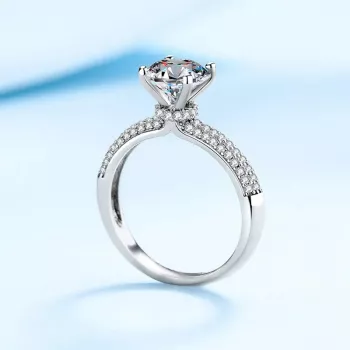
2 Carat D Color VVS1 Moissanite Ring in 18K White Gold

2 Carat Moissanite Engagement Ring in 18K White Gold (VVS1, D Color)
A 2 carat moissanite center stone paired with 18K white gold delivers a bright, crisp look with standout sparkle and everyday practicality. The combination of D color (colorless appearance) and VVS1 clarity (extremely minimal inclusions) is all about a clean, icy face-up look—especially in white metal. Below is a clear guide to what these grades mean visually, how 18K white gold wears over time, and what to check before choosing a ring built for long-term comfort and durability.
What This Ring Is at a Glance
This style centers on high-impact presence without sacrificing a polished, refined appearance. A 2 carat moissanite has a bold footprint on the hand, while D color and VVS1 clarity help keep the stone looking bright, transparent, and “crisp” in everyday lighting. The 18K white gold setting adds a premium feel and a cool-toned finish that complements a colorless center stone.
- Center stone look: a bold 2 carat presence with strong brilliance and fire typical of moissanite
- Color and clarity grade: D color (colorless appearance) and VVS1 (very clean look to the naked eye)
- Metal choice: 18K white gold for a bright, silvery finish and premium gold content
- Best for: someone who wants a high-impact center stone with a clean, icy face-up look
Quick Specs Checklist
| Feature | What it means | Why it matters |
|---|---|---|
| 2 carat center stone | Large visual footprint | More presence on the hand; important to balance with setting height and lifestyle |
| D color | Colorless appearance | Reads bright and white, especially in white metal |
| VVS1 clarity | Very, very small inclusions | Typically looks perfectly clean without magnification |
| 18K white gold | 75% gold alloy | Luxurious feel and value; may require periodic rhodium plating for peak whiteness |
Moissanite Sparkle: Brilliance vs. Fire
Moissanite is loved for intensity—bright white sparkle (brilliance) plus colorful flashes (fire). Compared with many diamonds, moissanite can show stronger rainbow dispersion, which is especially noticeable as the stone gets larger. At 2 carats, the visual “light show” is amplified, making cut quality and symmetry major contributors to how the stone performs on the hand.
- Fire-forward sparkle: indoor spot lighting and direct sunlight can emphasize rainbow flashes.
- Crisp brilliance: diffuse daylight and softer lighting often highlight a cleaner, whiter scintillation pattern.
- Cut and upkeep matter: a well-cut stone plus routine cleaning keeps the pattern sharp and the center looking lively, not hazy.
If a more diamond-like pattern is preferred, focus on excellent proportions, strong symmetry, and a setting that protects the stone from constant smudging. Even a top-grade stone can look “sleepy” when lotion and soap film build up.
Understanding D Color and VVS1 Clarity in Everyday Wear
D color indicates a colorless appearance, which pairs naturally with white gold for an overall bright, icy look. While color grading is most commonly discussed for diamonds, the concept is similar: the less visible body color, the whiter the stone reads face-up. For a plain-English overview of diamond color standards, the GIA’s reference on the Diamond Color Grade Scale is a helpful benchmark.
VVS1 clarity means inclusions are extremely difficult to see even under magnification and typically appear perfectly clean to the naked eye. In real daily wear, “clarity” is often less about tiny internal features and more about surface cleanliness—fingerprints, hand cream, and tiny residues can reduce sparkle far more than VVS-level inclusions ever would. For context on clarity terminology, see the GIA’s guide to Diamond Clarity.
- D color in white gold: helps maintain a bright, neutral look rather than warm or tinted.
- VVS1 day-to-day: reads very clean, especially at normal viewing distance.
- Biggest visual factor: a quick clean can restore the crisp “just-polished” look in minutes.
18K White Gold: Feel, Finish, and Maintenance
18K white gold contains 75% gold, which contributes to a premium feel and value. White gold gets its silvery tone from alloying metals and is commonly finished with rhodium plating for a bright, reflective white surface. Over time, that plating can wear—how quickly depends on body chemistry and daily habits.
- What changes over time: as rhodium thins, the ring may look slightly warmer or less “mirror-white,” especially on high-contact edges.
- What speeds up wear: frequent handwashing, sanitizers, gym equipment, household cleaners, and friction against hard surfaces.
- Best habit for longevity: remove the ring for heavy lifting, swimming in chlorinated pools, and cleaning with harsh chemicals.
For consumer guidance on precious metals and jewelry marketing terms, the FTC’s Jewelry Guides offer clear definitions and standards.
How 2 Carats Looks on the Hand
Care, Cleaning, and Storage
When This Style Makes the Most Sense
In-Stock Picks
- 2 Carat Moissanite Engagement Ring in 18K White Gold VVS1 D Color
- Brunello Cucinelli Cotton T-Shirt
- Cozy Striped Baby Romper Jumpsuit for Newborns & Infants 0-18 Months
FAQ
Will D color moissanite look too “icy” in white gold?
D color reads distinctly colorless, and 18K white gold reinforces that bright, cool-toned look. Whether it feels “icy” depends on personal preference and lighting; rhodium plating can also make the metal look extra white, which can heighten the overall crispness.
What does VVS1 clarity mean for a moissanite engagement ring?
VVS1 indicates extremely tiny inclusions that are typically impossible to see without magnification, so the stone usually appears eye-clean. In daily wear, regular cleaning and a good cut tend to influence sparkle more than microscopic clarity features.
Does 18K white gold require special maintenance?
18K white gold often has rhodium plating for a bright white finish, and replating can be done when wear reveals a slightly warmer tone. Gentle cleaning, removing the ring for harsh chemicals, and periodic prong checks help keep it looking and wearing its best.











Leave a comment