Build Patience Daily: Calm Thinking Tools for Stress
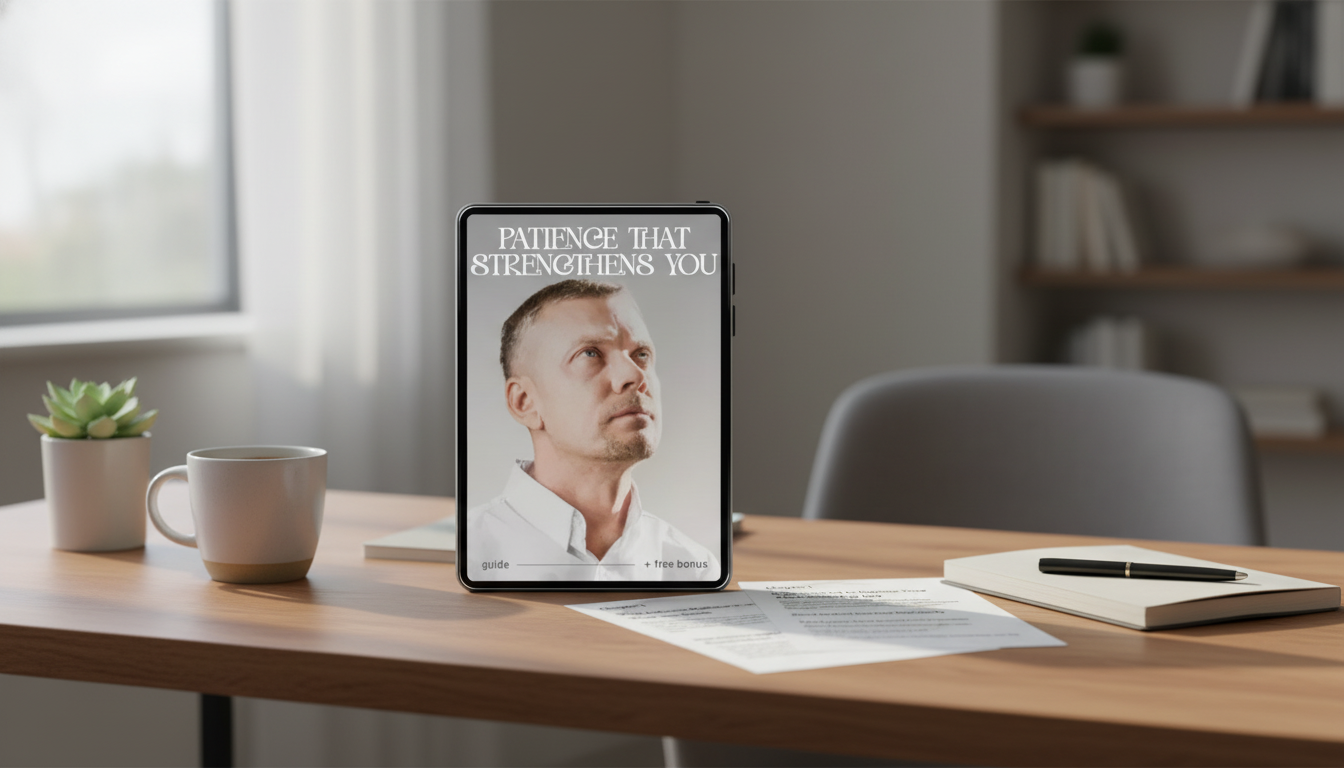
Patience That Strengthens You: A Daily Calm-Thinking Toolkit for Emotional Strength
Patience is not passive waiting—it’s an active skill that protects relationships, improves decisions, and reduces emotional wear-and-tear. When patience is strong, small hassles stay small: a delayed shipment, a slow app, a tense conversation, a child melting down at bedtime. The goal isn’t to never feel irritated; it’s to recover faster and respond in ways that match your values. The practices below break patience into trainable habits: noticing triggers, easing the body’s stress response, and choosing calmer next steps in the moments that matter.
What patience looks like in real life (and what it isn’t)
Patience often shows up as a pause—a small gap between a trigger and your response. That gap can be one breath, a softened jaw, or a simple “Let me think for a second.” It’s enough to keep the moment from taking over.
- Patience isn’t suppression. You can acknowledge anger, disappointment, or anxiety without letting it drive your tone or decisions.
- Common signs of low patience include rushed choices, snapping mid-conversation, and simmering irritation at delays or mistakes.
- Patience strengthens confidence because you prove—repeatedly—that discomfort doesn’t control you. You can feel pressure and still steer.
Why impatience spikes: the body–mind loop
Impatience isn’t just a “personality flaw.” It’s often a predictable loop between physiology and attention.
- Stress physiology: when the nervous system ramps up, the mind narrows toward “fix it now.” This is why irritation can feel urgent and absolute.
- Cognitive overload: multitasking and constant notifications lower tolerance for friction. When your brain is already full, a minor obstacle can feel personal.
- Expectation mismatch: impatience spikes when reality moves slower than your internal timeline—especially if you’ve mentally “already moved on” to the next task.
- Practical takeaway: calming the body first often makes calm thinking possible. Trying to “think your way out” while your body is in high alert can backfire.
For a clear overview of how stress affects the body, see the American Psychological Association’s guide on stress effects.
A 3-step reset for the moment impatience hits
When impatience arrives, treat it like a fire alarm: it’s loud, it demands action, and it doesn’t always mean there’s a true emergency. Use this quick reset anywhere—lines, traffic, parenting moments, customer support, or disagreements.
Step 1 — Name it
Label the emotion: “I’m getting frustrated,” or “I’m feeling rushed.” Naming reduces intensity by shifting the brain from reaction to recognition.
Step 2 — Slow the body
Take 3–5 slow breaths. Drop your shoulders. Unclench your jaw. If you can, relax your hands. This small physical “downshift” signals safety and restores choice.
Step 3 — Choose a next action
Ask: “What response would I respect in 10 minutes?” Then pick the smallest respectful step—clarify, ask a question, pause, or propose a solution.
Daily practices that grow patience over time
Patience grows with repetition, not willpower. These practices are designed to fit into normal days without adding a huge time burden.
A simple weekly patience plan (10 minutes a day)
| Day | Focus | 10-Minute Practice | Real-World Trigger to Use It |
|---|---|---|---|
| Day 1 | Awareness | Track top 3 impatience triggers and what they feel like in the body | Waiting in line or slow apps |
| Day 2 | Breathing | 3 rounds of 4-6 breathing (inhale 4, exhale 6) | Traffic or delays |
| Day 3 | Reframing | Write 3 alternative interpretations for one recent frustration | Miscommunication |
| Day 4 | Response choice | Practice the question: “What response helps most here?” (5 scenarios) | Conflict at home/work |
| Day 5 | Boundaries | Pick one boundary that prevents overload (notifications, schedule, workload) | Back-to-back tasks |
| Day 6 | Compassion | 2-minute loving-kindness or gratitude for someone difficult | Customer service, parenting |
| Day 7 | Review | Identify one win, one pattern, one adjustment for next week | Any recurring trigger |
Mindfulness for calm thinking: making space without zoning out
For practical mindfulness guidance, the NHS mindfulness overview offers a helpful starting point.
When patience is hardest: relationships, parenting, and work stress
A guided toolkit to practice with structure
Patience That Strengthens You – Digital Guide: what it supports
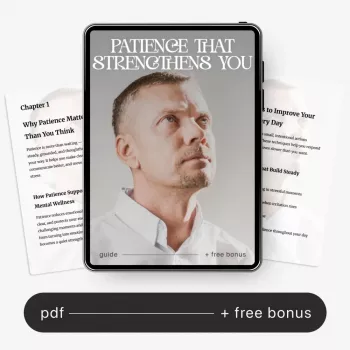
If you want a ready-to-use routine, Patience That Strengthens You – Digital Guide is designed for daily patience-building with mindfulness and calm-thinking practices. It supports emotional strength by helping responses stay aligned with your values under stress, with a quick-start approach that’s easy to apply immediately.
Everyday picks that support a calmer day
- Cozy Striped Baby Romper Jumpsuit for Newborns & Infants 0-18 Months (helpful for simplifying routines and reducing last-minute scramble)
- Toddler Baby Goose Embroidered Knit Sweater – Cozy Fall & Winter Pullover (a cozy layer that can make transitions smoother in busy mornings)
- Brunello Cucinelli Cotton T-Shirt (a simple wardrobe staple that supports low-friction decision-making)
FAQ
How long does it take to improve patience?
Noticeable changes can show up in days to a few weeks with daily practice, especially if you focus on calming your body and pausing before responding. A practical way to measure progress is faster recovery and fewer escalations—not never feeling annoyed.
What should be done when impatience shows up in the middle of a conversation?
Pause and name it briefly: “I’m getting frustrated—give me a moment to respond well.” Take two slow breaths, soften your face and shoulders, then reflect back what you heard before answering so your tone stays respectful.
Is mindfulness helpful for anger and irritation?
Yes—mindfulness trains attention so you can notice anger signals without automatically acting on them, which reduces impulsive reactions. Simple tools like slow breathing and quick grounding can help in the moment; if anger feels unmanageable or unsafe, professional support is important.















Leave a comment